Getting a VAG Car Repaired in Moscow: A Golden Rule Checklist
November 28, 2026
Most of us have been on the wrong end of a car repair at least once. You bring the car in with one strange noise and leave with a big bill, a list of parts you never heard of, and the feeling that you agreed to something you didn't understand. The shop knows far more about your car than you do. That gap is where the Golden Rule gets tested: will the person who knows more treat you the way they'd want to be treated if they were the one who didn't know?
This guide is for newcomers: people who just moved to Moscow, just bought a used Audi or Volkswagen, or have never dealt with a mechanic before. The example throughout is Rocket Service (Рокет Сервис), which works on Volkswagen Group (VAG) cars near Kievskaya metro station. The questions themselves work at any garage.
Three kinds of visit
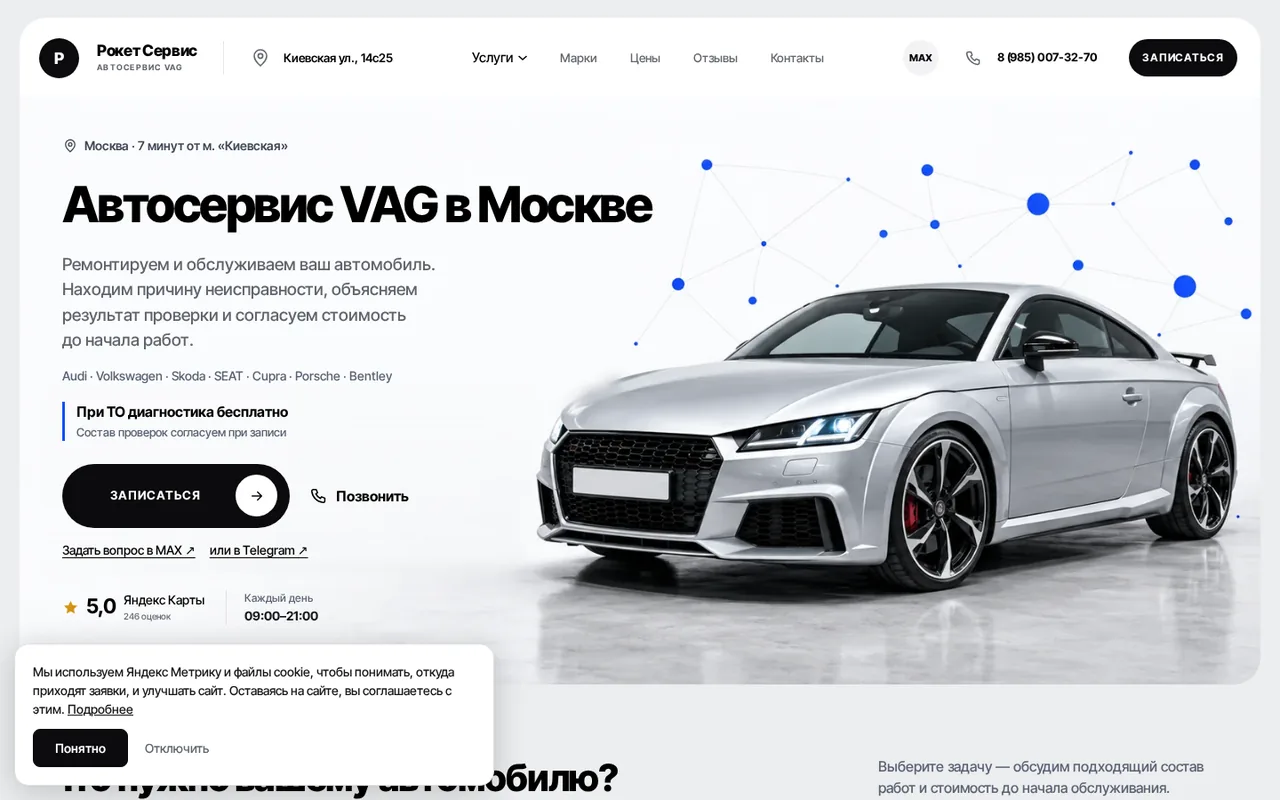
Before you call anyone, decide which of three kinds of problem you have. That decides what you ask for and what you should expect to pay. The Rocket Service home page is organised around the same three cases, so it starts from what the customer actually knows.
- Something is wrong, but you don't know what. A warning light is on, or the car behaves oddly. You need a diagnosis first, not a repair.
- You know exactly what you want. An oil and oil-filter change, for example. You need one specific job done.
- Scheduled maintenance is due. Your mileage or the calendar says it's time. You need a maintenance plan that matches your car's schedule.
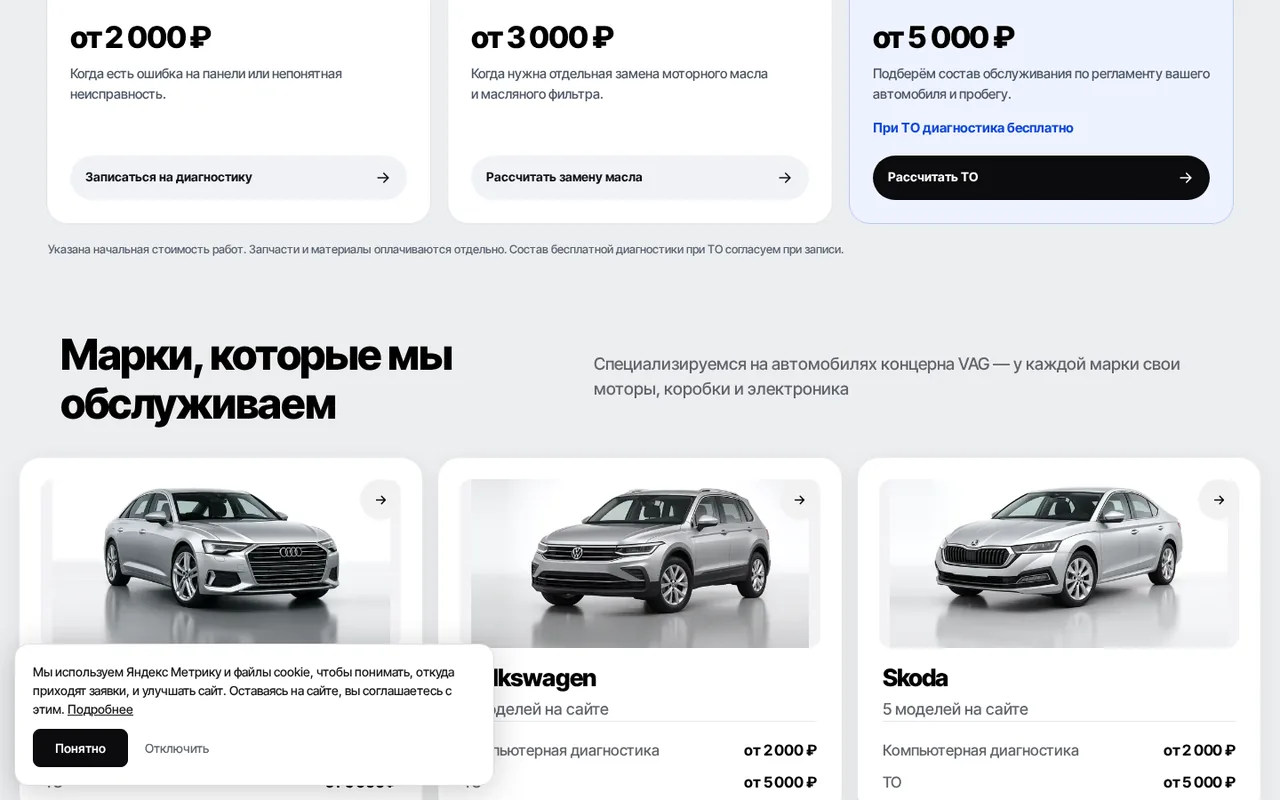
Here is how the shop's published starting prices line up with those cases:
| Your situation | What to ask for | Starting price for labor |
|---|---|---|
| Error on the dashboard or a problem you can't explain | Computer diagnostics | from 2,000 ₽ |
| You need one specific replacement | Engine oil and filter change | from 3,000 ₽ |
| Maintenance is due | Scheduled service matched to your car and mileage | from 5,000 ₽ |
| You drive a Porsche | PIWIS diagnostics (Porsche's own system) | from 5,000 ₽ |
These are starting labor prices, and the shop states plainly that parts and materials are paid separately. If you book scheduled maintenance, diagnostics are free, and what that check covers is agreed when you book. Fine print you can read before you arrive is fine print that can't surprise you later.
Symptom is not cause: diagnosis comes first
Logic students learn early not to confuse a symptom with its cause. "If the timing belt is failing, the engine runs rough; the engine runs rough; so the timing belt is failing" is the classic fallacy of affirming the consequent. A rough engine has many possible causes. A good mechanic works like a good logician and rules things out before deciding.
So look for a shop that promises to find the cause, not to swap parts until the symptom goes away. Rocket Service describes its process in three steps on its front page: find the cause of the fault, explain what the inspection showed, and agree on the cost before work begins. The middle step matters most. If a mechanic can't or won't explain the problem in plain words, you can't really consent to the fix.
Specialization helps. Volkswagen Group brands share engines, gearboxes and electronics, but each has its own quirks. The shop lists Audi, Volkswagen, Skoda, SEAT, Cupra, Porsche and Bentley, and it offers repair and maintenance for VAG cars covering engines and diesel engines, automatic and DSG gearboxes, suspension, brakes, steering racks, electrics, air conditioning, timing belts and wheel alignment. Mechanics who see the same family of cars every day tend to recognise a pattern sooner.
Price first, wrench second
This is where the Golden Rule bites hardest in a repair shop. Put yourself in the mechanic's place with yourself as the customer. Nobody wants their own car taken apart and then handed a bill they never agreed to. The fair practice follows directly: tell the customer what you found, tell them what it will cost, and wait for a yes.
A short checklist for any garage:
- Ask whether the estimate is agreed before work starts. (Rocket Service says it is.)
- Ask what the labor price includes and what is charged as parts and materials.
- Ask what happens if the mechanic finds something new halfway through. The fair answer: they stop and call you.
- Ask about a warranty on the work. The shop mentions one in its description; ask what it covers for your particular job.
- Keep the agreed estimate in writing, even if it's only a message in a chat app.
None of this is rude. Clear agreements protect an honest shop as much as they protect you.
Reviews as evidence, not proof
Online ratings tell you something, but not everything. A few habits help you weigh them.
Count the sample
A perfect score from five people tells you little. Rocket Service shows a 5.0 rating on Yandex Maps from 246 ratings and 164 written reviews, with the figures dated October 29, 2026. That is a reasonable sample, and the date shows it is recent. The site also links to reviews on 2GIS, so you can compare two independent sources.
Read the words, not just the stars
Stars show whether people were happy; the text shows why. Two reviews quoted on the shop's site are typical. One customer, in February 2023, praised a clean, bright shop, modern equipment and skilled mechanics who quickly understood the problem. Another, in September 2025, said the manager explained everything and gave a sense of the price up front, and the mechanic did the job quickly and well. What both valued was being understood and being told things, which is exactly what the two sections above ask for.
Confirm the place exists
Photos on a map listing, especially ones posted by customers, show whether the shop looks the way it claims. The shop's own photos show the entrance, a Porsche Cayenne on a lift in the workshop, and a diagnostic and wheel-alignment bay.
Getting there and booking
Once you've picked a shop, what's left is time and convenience. If you have no second car, getting there and back matters a lot.
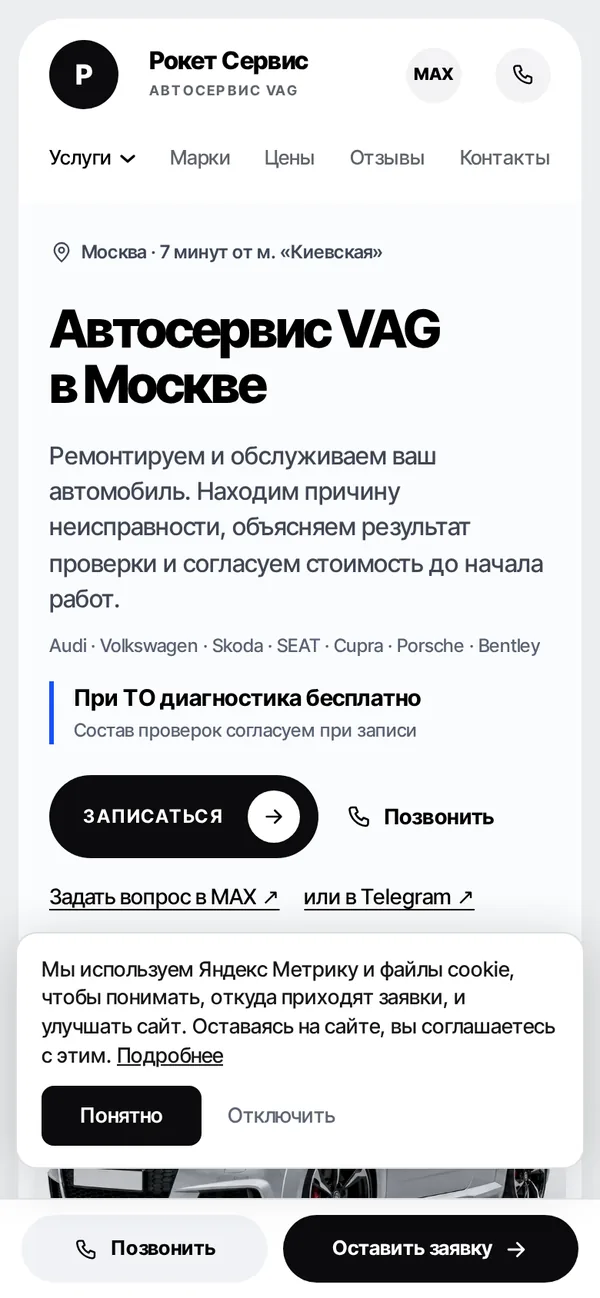
- Location: Kievskaya Street, 14 building 25, Moscow, about a seven-minute walk from Kievskaya metro station. You can drop the car off and take the metro.
- Hours: every day, 09:00–21:00, which helps if you work office hours.
- Booking: leave your name and phone number in the form, and they promise a callback within five minutes during working hours. You can add the make, model, year and a short note about the problem.
- If you'd rather write than talk: the shop takes questions through the MAX and Telegram messengers. That helps if your written Russian is better than your spoken Russian, and it gives you the estimate in writing anyway.
When you're ready, you can book a diagnostic appointment and choose the brand from the list in the form.
The rule runs both ways
The Golden Rule asks something of the customer too. Put yourself in the mechanic's place again: you'd want clear facts, not a vague "it makes a noise." Before you go, write down when the problem shows up (cold engine, highway speeds, turning), what the warning light looks like, and when the car was last serviced. Mention anything you or a previous shop already tried. A mechanic with good information can reason faster, and you'll follow the explanation better.
Turn up when you said you would. If you decline a repair, say so plainly rather than going quiet. Pay for the work you agreed to. A shop that is treated fairly finds it easier to treat the next newcomer fairly, and that is what you were hoping for when you walked in.